Your guide to what micropropagation is, how it works, and how your nursery or breeding programme can benefit from it.
Micropropagated poinsettia
Modern Plant Production Starts in the Lab
It may come as a surprise, but today, a wide variety of commercially available plants start life in a laboratory.
Just think about the weeks leading up to Christmas: supermarkets and garden centres around the world are suddenly filled with perfectly uniform poinsettias, all at the same height, colour, and stage of development. When you stop to consider the scale of this—millions of identical plants appearing at the same time—it quickly becomes clear that traditional propagation methods couldn’t reliably meet this kind of demand.
The answer is micropropagation: a powerful, highly controlled plant production technique used across a vast range of plant varieties, from ornamentals and houseplants to fruit trees and tropical species.
Mastering Micropropagation for Commercial Success
At Borneo Exotics, micropropagation is at the heart of everything we do.
We turned to it out of necessity. Traditional methods weren’t enough for Nepenthes, a genus known for its slow growth from seed and the inconsistency and disease susceptibility of cuttings. To meet demand and maintain quality, we built our own lab and invested years in mastering micropropagation—developing some of the most advanced techniques in the industry to overcome the unique challenges of this complex genus.
What began as a solution for our own production needs has grown into something more. Today, we offer contract micropropagation services to breeders and nurseries around the world—supporting both large-scale commercial operations and critical conservation work.
And while we learned our craft through working with Nepenthes, our expertise is fully transferable to a wide range of other commercially valuable, rare, and endangered plant genera.
What Is Micropropagation?
Micropropagation is a method of producing plants under sterile laboratory conditions, designed to generate high numbers of genetically identical, healthy plants. It typically begins with either a sterilised seed (in micropropagation) or a small section of plant tissue (in tissue culture), which is grown on a nutrient-rich jelly called media.
This media contains the minerals and vitamins required for development and is adjusted through each stage to promote specific growth responses using plant growth regulators—primarily cytokinins and auxins.
A plantlet will typically pass through three key stages of development in the lab, before reaching the fourth and final stage of being weaned into a nursery environment:
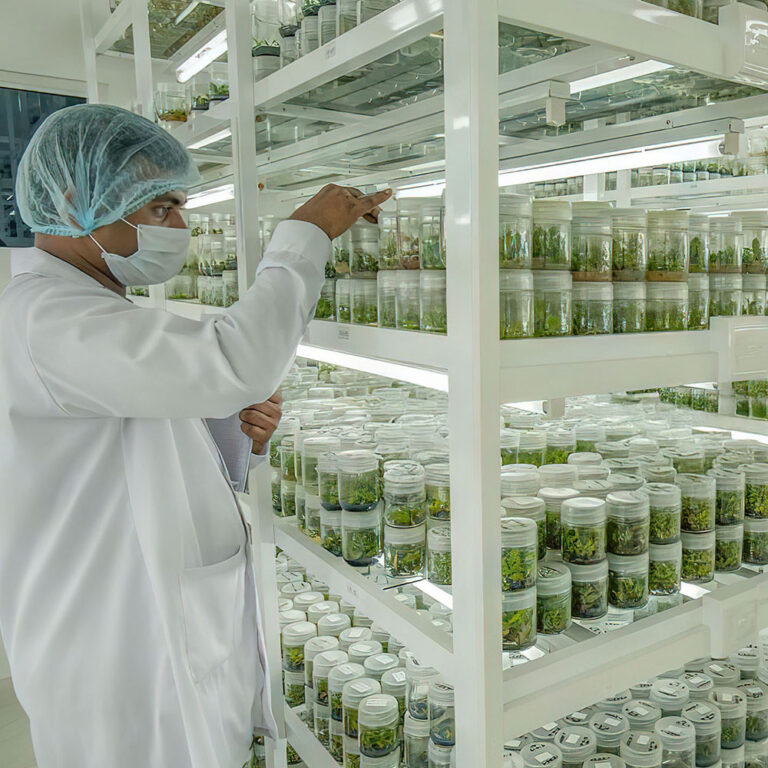
Newly initiated plantlets being checked for signs of contamination
1. Initiation Stage – The sterilised seed or tissue is first established in culture, with media designed to support initial cell survival and promote early development.
It is quite typical for a nursery or breeder to supply a lab with plant material that is already growing in sterile conditions like this.
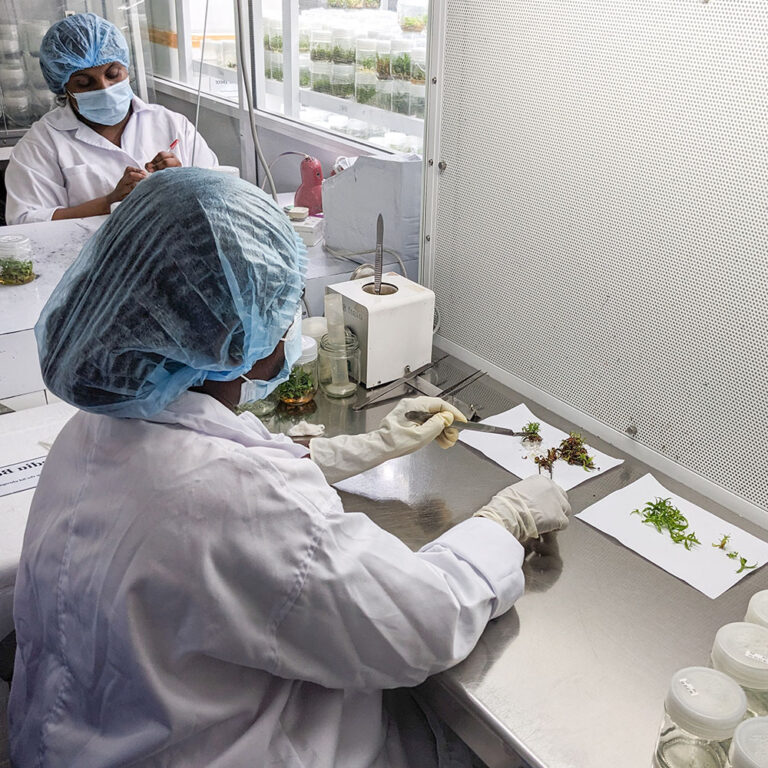
Plantlets being divided to make multiple cuttings
2. Multiplication Stage – Once established, the plant material is transferred to media that encourages shoot proliferation, typically using higher cytokinin concentrations. Once a young plantlet reaches a suitable size, it becomes mother stock. From there, cuttings are taken—still under sterile conditions—to produce more identical plantlets. This cycle can be repeated many times, creating large numbers of healthy plantlets from a single individual.
If you’re used to propagating with traditional cuttings, you’re already familiar with the basic principles of micropropagation.
Micropropagation takes that concept to a highly efficient, precise, and scalable level, making it possible to reliably produce thousands of genetically identical, robust plants in a fraction of the time.
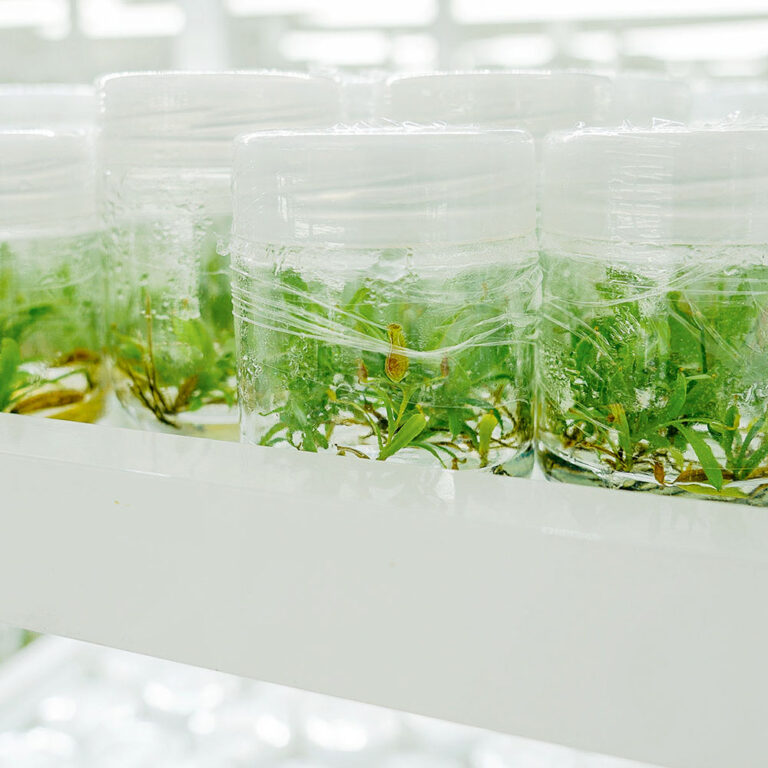
Plantlets just before they are ready to be weaned
3. Elongation and Rooting Stage – Shoots are moved to a different medium formulated to support elongation and prepare the plantlets for rooting. Cytokinin levels are reduced, and in some cases, auxins are introduced to encourage early root initiation.
Each transfer to a new medium is carefully timed and adjusted to promote the best response at that specific stage. These changes are essential for producing vigorous, uniform, and healthy individuals.
Once plantlets have developed to a suitable size, they are sometimes rooted while still in the lab before being transferred to soil or other growing media to be weaned into a nursery environment.
Why This Matters for Commercial Cultivars
For commercial growers, the advantages of micropropagated plants are significant:
100% disease-free from the start
Faster growth and greater uniformity
Consistent size and appearance across batches
Reliable expression of key traits
Sustainable scaling of rare, slow-growing, or complex hybrids
Whether you’re developing new cultivars or scaling a proven favourite, micropropagation delivers precision, speed, and reliability.
Micropropagation vs. Tissue Culture: What’s the Difference?
The terms micropropagation and tissue culture are often used interchangeably — but they are not the same. While both techniques are carried out in sterile lab environments, they begin from different starting points and serve slightly different purposes.
Micropropagation usually starts with seed germination. Once a seed has grown into a plantlet, it is multiplied from sterile cuttings, producing many genetically identical offspring. It is common for a nursery or breeder to supply a lab with plantlets that are already in a sterile condition, ready to be multiplied.
Tissue culture, by contrast, allows you to start with just a small piece of plant tissue — such as a shoot tip, root segment, or leaf section. This is especially useful when no viable seed is available or when you want to mass-produce a specific mature plant with valuable traits. Once the plantlet becomes large enough to be used as mother stock, micropropagation techniques are then used to scale up its production.
Our Expertise in Both Methods
At Borneo Exotics, we’re equipped to perform both micropropagation and tissue culture to a high commercial standard.
Just like with micropropagation, we honed our tissue culture skills with Nepenthes—a genus widely regarded as one of the most difficult to initiate into sterile culture. The challenge lies in the delicate balance required during sterilisation. Nepenthes plant tissue often carries multiple viruses and pathogens, which must be eliminated to ensure clean, healthy mother stock. But sterilising too aggressively risks killing the tissue itself.
Through years of refinement, we’ve mastered this fine balance—achieving success where others struggle. That hard-earned expertise now supports a wide range of plant varieties and conservation projects beyond Nepenthes.
A typical sterile bag of 20 plantlets ready for shipment.
How We Ship to Micropropagation Clients
For our micropropagation clients, we ship plantlets in sterile polypropylene bags, typically in batches of 20. The bags are sealed and embedded in a soft nutrient medium to support the plants during transit.
It’s completely normal for the media to become liquefied during shipping and for plantlets to appear loose inside the bag. This does not affect their health or viability. Once received, plantlets are ready for weaning and can be grown on-site under your own nursery conditions.
For Our Nepenthes Clients
If you purchase Nepenthes from Borneo Exotics, we’ve already done the weaning for you. Here’s how we do it:
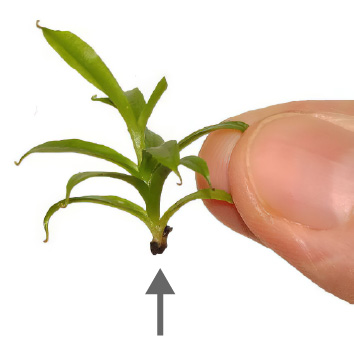
A plantlet ready for weaning, with dark callus tissue at the root area
Understanding Roots
From decades of experience, we’ve found that the roots formed during tissue culture are temporary. Once the plant is potted, those roots typically die off and are replaced by a new root system suited to the plant’s final growing environment.
The most important indicator of success isn’t the root mass itself—it’s the presence of a small darkened area called callus tissue at the base of the plantlet. This is where strong, healthy roots will emerge post-transplant.
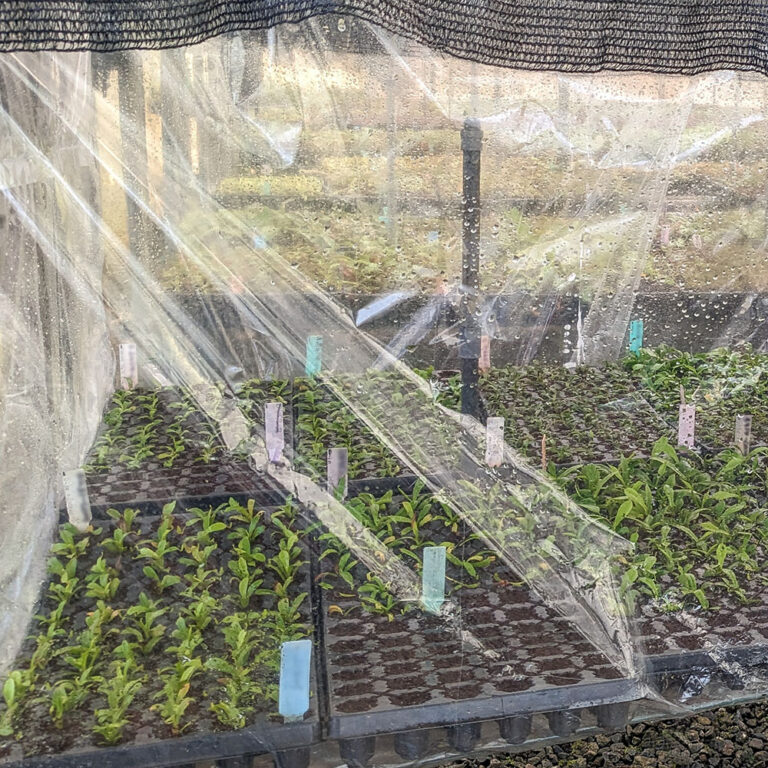
Young Nepenthes being weaned ready for the next stage
The Weaning Process
Weaning is the process of acclimatising plantlets from the sterile, high-humidity lab environment to normal nursery conditions. This must be done gradually and carefully. At Borneo Exotics, we manage this entire process in-house for our Nepenthes plants, ensuring they arrive ready to thrive in your nursery.
Ready to Take the Next Step?
Whether you’re a breeder looking to scale your cultivars or a nursery seeking disease-free, high-performance stock, we’re ready to help.
We provide trusted propagation for the plants that set you apart.